

It might be one of the most classic designs in science: an all-white, louvered wooden box. Why, in an age of satellites and radar, do we still rely on it to tell us the fundamental truth about our weather?
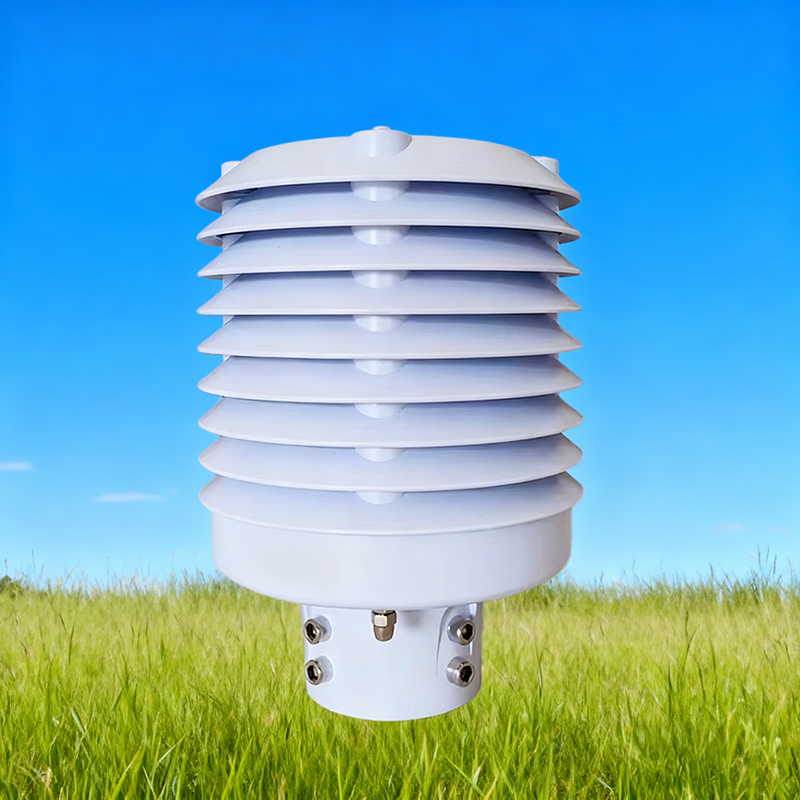
In a corner of a park, on the edge of an airfield, or in the middle of a vast field, you may have seen it—a pure white box resembling a miniature house, standing quietly on a post. It seems simple, even antiquated, but inside, it guards the cornerstone of all meteorological science: accurate, comparable environmental data.
Its name is the “instrument shelter,” but it’s famously known as the Stevenson Screen. Its mission is to be an “impartial judge,” taking the temperature of nature and recording the pulse of the air, free from any bias.
I. Why a “Box”? The Three Archenemies of Accurate Data
Imagine placing a thermometer directly in the sun. Its reading would skyrocket due to solar radiation, failing to reflect the true air temperature. Placing it in a sealed box would turn it into an “oven” due to lack of ventilation.
The design of the Stevenson Screen is a masterful solution to simultaneously combat the three main enemies of data accuracy:
- Solar Radiation: The brilliant white surface maximizes sunlight reflection, preventing the box from absorbing heat and warming up.
- Precipitation and Strong Wind: The slanted roof and louvered structure effectively prevent rain, snow, or hail from entering directly, while also mitigating the impact of strong wind on the instruments.
- Thermal Radiation from the Ground: Installation at a standard height of about 1.5 meters places it away from heat radiated from the ground.
II. Why “Louvers”? The Art and Science of Breathing
The most ingenious part of the Stevenson Screen is its louvers. These slanted boards are not decorative; they form a precise physical system:
- Free Ventilation: The louvered design allows air to flow freely, ensuring the instruments inside measure the moving, representative ambient air, not stagnant, “trapped” local air.
- Light Barrier: The specific angle of the louvers ensures that no matter the sun’s position, direct sunlight cannot reach the instruments inside, creating a permanent zone of shade.
This design is so successful that its core principle has remained unchanged since its invention in the 19th century. It ensures that data from weather stations across the globe are collected under the same standard, allowing data from Beijing to be meaningfully compared with data from New York. This provides a long-term, consistent, and precious data chain for studying global climate change.
III. Modern Evolution: From Temperature to Gas Monitoring
The traditional Stevenson Screen primarily protected thermometers and hygrometers. Today, its mission has expanded. A modern “Thermohydrometer and Gas Shelter” may also house:
- CO₂ Sensors: Monitoring background atmospheric carbon dioxide levels, crucial for greenhouse effect research.
- Other Gas Probes: For monitoring ozone, sulfur dioxide, and other gases impacting agriculture, ecology, and public health.
It remains the same impartial guardian, just keeping more secrets.
Conclusion
In a world filled with smart sensors and IoT buzzwords, the Stevenson Screen, with its classic physical intelligence, reminds us that data accuracy begins at the most fundamental level. It is a bridge connecting the past and the future, the silent cornerstone of meteorological science. The next time you see one, you’ll know it’s not just a white box—it’s a precision instrument that “feels” the pulse of nature for humanity, an eternal “impartial judge” of data, standing firm through wind and rain.
Complete set of servers and software wireless module, supports RS485 GPRS /4g/WIFI/LORA/LORAWAN
For more gas sensor information,
please contact Honde Technology Co., LTD.
Email: info@hondetech.com
Company website: www.hondetechco.com
Tel: +86-15210548582
Post time: Nov-27-2025